

The first thing to know about Split Airport is that it is not in Split. It sits about 23 kilometres west of the city at Kastela, on the coast road between Split and Trogir, and that distance shapes everything about the first hour of a trip. Trogir is five kilometres from the terminal; the palace is half an hour away on a good run and considerably more on a bad one.
The airport handled 3.88 million passengers in 2025, more than any year before it, and almost all of them arrive between May and October. July sees something like 26 times the traffic of January. So the advice here is weighted towards the season most people actually land in, when the terminal is full, the coast road is slow, and the choices that work in March stop working.
Below is every realistic way into the city, what each one costs in time, and when each one is the right call.
Where you are when you land
The terminal is easy to recognise: a row of white canopies over the forecourt, shaped like tree tops. The shuttle bus, the taxi rank and the pick-up area where pre-booked drivers wait with name boards are all outside arrivals, and the car hire desks are inside the terminal.
The road outside is the old coast road running through the seven villages of Kastela. That matters, because every option below except a boat uses it, and on a July afternoon it moves at the pace of the slowest bus.
The airport shuttle bus
The shuttle is the default for most independent travellers, and for good reason. It runs from the terminal to the main bus station in Split, which stands beside the ferry port and the railway platforms on the eastern arm of the harbour, five minutes' walk from the palace walls. Journey time is roughly 30 to 45 minutes depending on traffic, the fare is around eight euros, and in the busy months departures run about every half hour, timed to the arrivals board.
Two things make it better than it sounds. It drops you in the one place in Split where the ferries, the coaches and the trains all meet, so if you are heading straight on to Brac or Hvar it puts you at the quay. And it carries luggage in the hold, which matters when the alternative is dragging a case onto a city bus.
The limitation is the last stretch. The palace quarter is entirely pedestrian, so from the bus station you walk the final few hundred metres to anywhere inside the walls, over stone, with your bags.
The city bus, number 37
The cheaper option, and the one people take by mistake. Bus 37 runs between Trogir and Split along the old road, stopping on the main road near the airport, for about half the shuttle fare. It is a genuine public bus, used by people who live along the route, which is both its charm and its problem.
It takes 50 to 60 minutes, it stops frequently, and it ends at the Sukoisan city bus terminal rather than the main bus station by the harbour. That is the mistake that costs people an hour: they assume every bus into Split arrives at the same place, and find themselves a long walk or a second journey from the palace with their luggage. Take the 37 if you are travelling light, staying on the eastern side of the city, or heading to Trogir instead. Otherwise the shuttle is worth the difference.
Taxis and ride-hailing
Taxis wait at the rank outside arrivals. In normal traffic the run into central Split takes about half an hour, and it takes you to the edge of the pedestrian zone nearest your address, which is the most useful thing a taxi does here. Ask what the fare will be before the car moves; on this run a figure agreed at the kerb avoids surprises in the Kastela traffic. Uber and Bolt both operate in Split and are worth comparing with the rank.
For a longer run, the city's taxi trade works more like a transfer business than a metered service. Airport Taxi Split quotes set fares on named routes that reach Trogir, Sibenik, Zadar, Makarska, Krka and Dubrovnik, and Kajla Taxi Split publishes its prices route by route. The rest of the city's firms are in taxis.
Booking a transfer in advance
For a family, a group, a late flight or anybody who would rather not negotiate at the kerb, a pre-booked transfer is the calm option. The driver tracks the flight, waits in arrivals with a name board, and the price is agreed before you leave home.
The operators differ in the ways that matter to particular travellers. Maci-Tours supplies baby seats on request and quotes a figure that already carries the tolls, taxes and insurance. Go Shuttle Taxi Transfers keeps cancellation free up to a day before travel. Secure Drive Private Transfers runs up to a 49-seat coach, which moves a whole group in one go. The full list is under airport transfers.
A transfer earns its price most clearly on the way out of the city. Flights leave early in the morning in summer, the shuttle does not always run to suit them, and a car booked the night before removes the one worry nobody needs at five o'clock.
Hiring a car at the airport
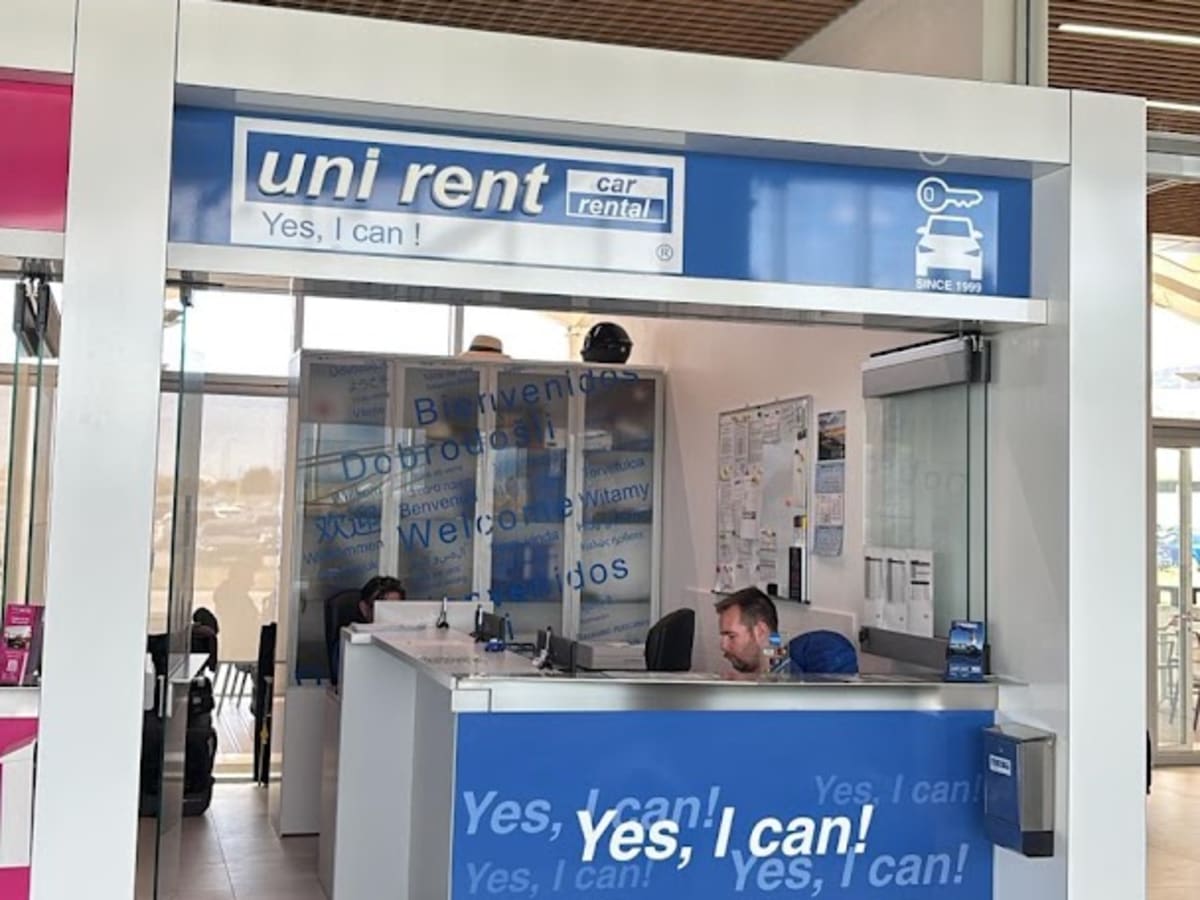
If the plan includes Krka, Plitvice, the Cetina canyon or anywhere inland, collecting a car at the terminal saves a journey into town and back. Uni Rent has a desk inside the terminal and lists a ramp-fitted eight-seat van, which is the category that matters for a group travelling with a wheelchair. Carwiz runs its airport desk as part of a network with offices at Zagreb, Rijeka and Dubrovnik as well. In the city, M.A.C.K. Rent a Car and Nova Rent a Car cover pick-ups there, and Nova delivers to a marina berth for a holiday that starts on a charter boat. The rest are under car rental.
The honest counterpoint: if you are staying in the old town for the first few days, do not collect the car yet. The palace quarter has no parking, the streets around it are narrow and short of spaces, and a car you are paying for will sit in a garage while you walk. Pick it up on the morning you leave the city.

If you are driving into Split
Split rewards arriving by car with one decision made in advance: where the car goes. Two options cover most visitors.
The Railway Station Car Park is the position play. It is on the quay beside the ferry, the coach station and the railway, about 200 metres from the old town, guarded and open around the clock, with room for campervans. Leave the car there and the rest of a trip can happen on foot and on ferries.
Split City Parking at Firule is the covered alternative: more than 300 spaces including oversized bays for vans, bookable online, at published rates of two euros fifty an hour, twenty five for a day and a hundred for a week. It is about ten minutes' walk from the old town and five from the sea. More options are under parking.
Going straight to the islands
A great many arrivals are not staying in Split at all, and for them the airport shuttle is the obvious choice for a reason that has nothing to do with price: it stops next to the ferry quay. From the bus station it is a short walk to the car ferries for Supetar on Brac and Stari Grad on Hvar, and to the catamarans for Hvar town, Bol, Vis and further down the coast.
Build in slack. Between the landing, baggage, the shuttle and the Kastela traffic, two hours from touchdown to a boat is realistic, and summer catamarans sell out. Book the crossing for a later departure than the arrivals board suggests you could make, rather than the earliest.

Going the other way
Leaving is where the timings bite. The coast road out through Kastela is at its slowest in the late afternoon in July and August, exactly when a wave of departures is heading to the airport. Allow at least an hour from the palace to the terminal in the high season, more if your flight leaves between four and seven in the evening, and check whether the shuttle's departure times suit your flight before relying on it.
For an early morning flight, book a transfer or a taxi the evening before. And if you have a few hours to fill before an evening departure, consider spending them in Trogir, five kilometres from the terminal, rather than in Split: it is a better use of the last afternoon than the coast road.
Which to choose
Travelling light and heading for the old town or a ferry: the airport shuttle.
Travelling light, on a tight budget, staying east of the centre or going to Trogir: bus 37, knowing where it ends.
A family, a group, a late arrival or an early departure: a pre-booked transfer.
Two or three people with luggage who want to be dropped as close as possible to the door: a taxi or a ride-hailing car, with the fare agreed.
Going inland or along the coast in the first days: a hire car from the terminal. Staying in the city first: collect it later.


